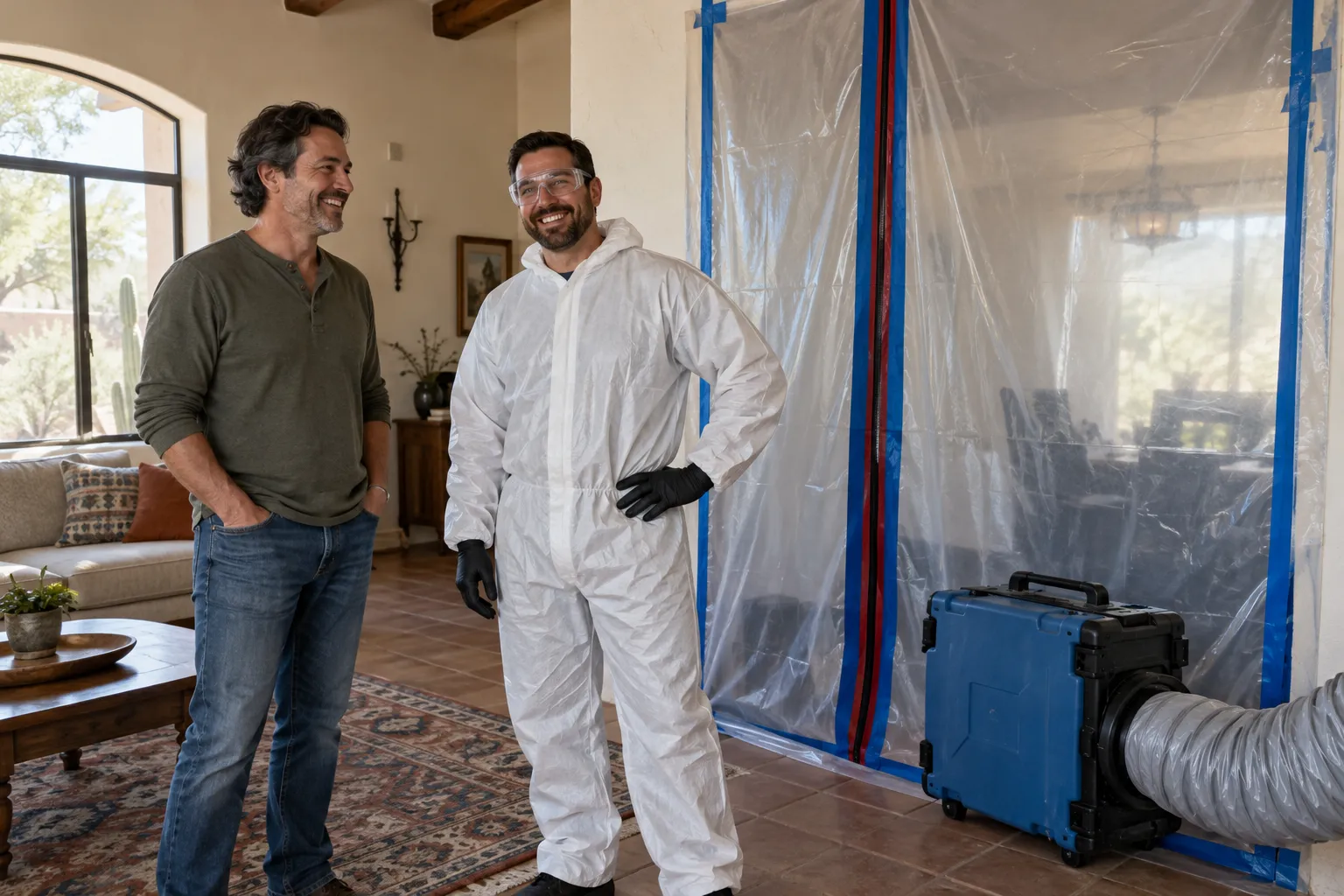
Mold remediation means removing mold from your home and dealing with whatever let it grow. It is more than a wipe-down. A provider contains the area, takes out what cannot be saved, cleans the rest, and helps you find the damp spot behind it all.
Marshallfeet Mold Help is a referral service. It does not do the work. It connects you with independent providers in the San Jose area who handle residential mold removal, so you can compare options and ask good questions. You stay in charge. Request an estimate, read it slowly, and choose the provider who explains things clearly and makes you feel at ease.
Seeing or Smelling Mold? Start Here
First, take a breath. Mold is common, and it can be fixed. Finding it is the hard part, and you have done that.
Look for fuzzy spots, dark stains, or a musty smell that will not fade. Check closets, under sinks, and walls that feel damp. If the patch is larger than a few square feet, or it keeps coming back, it is time to talk to a local provider.
Request a callback to check provider availability in your area.
What to Do While You Wait
A few small steps can keep things from getting worse.
- Stop the water if you can. Shut a valve or catch a drip with a bucket.
- Leave dry mold alone. Scrubbing or sweeping sends spores into the air.
- Run a dehumidifier in the room, and keep fans from blowing across the spot.
- Take dated photos. They help with estimates and claims.
- Keep kids, pets, and anyone with breathing trouble out of the room.
Why Mold Gets Worse Over Time
Mold needs three things: moisture, something to eat, and time. Drywall, wood, and carpet are all food. Once a spot stays damp, mold can creep into the wall behind it.
The patch you see may be the small part. Waiting can mean more material to remove later, and that can raise the price. Acting soon is kinder to your home and your wallet.
What Remediation Involves
Good remediation follows a plan. The provider looks at the space, marks the affected area, and sets up barriers. Then they remove damaged material that cannot be cleaned, such as soaked drywall. Hard surfaces get cleaned and dried. Air filtration runs the whole time.
At the end, the provider should walk you through what was done. Many will also suggest testing to confirm the cleanup worked.
Why Containment Matters
Mold spores are tiny. If a room is not sealed off, they can drift into clean rooms and settle on new surfaces. That is how a closet problem becomes a whole-hallway problem.
Providers use plastic sheeting, sealed doorways, and air machines that pull air through filters. If a provider plans to start tearing out walls with no barriers in place, ask why.
Find the Moisture First
This is the part many people skip. Cleaning mold without fixing the water is like mopping while the faucet runs.
Common causes include slow plumbing leaks, roof leaks, poor drainage near the foundation, and rooms that trap humid air. Winter rain can push water against stucco walls and slab edges. A good provider will point out the likely source or tell you which trade to call for the repair.
Find the moisture, and the mold has little reason to return.
Mold and Your Insurance
Some policies may cover sudden damage, like a burst pipe. Slow leaks and long-term neglect are often treated differently. Check your policy, and ask your agent before work starts.
Providers can often help document damage for a claim. Photos, notes, and written scopes of work all help. Ask for them in writing.
Questions to Ask Before You Hire
Ask before you hire. A calm, clear answer is a good sign.
- Will you give me a written scope and quote?
- How will you contain the area?
- What will you do about the moisture source?
- How will we know the job worked?
- What licenses or insurance do you carry, and can I see proof?
A good provider answers plainly and does not rush you.
Red Flags to Watch For
Be careful if someone gives a price over the phone without seeing the space. Be careful, too, if they use scare tactics, ask for full payment up front, or say they can fix everything with a spray. Vague paperwork is another warning sign.
You are allowed to get more than one estimate. Good providers expect it.
After the Work: Keeping It Away
The job is not truly done when the crew leaves. Keep indoor humidity low, ideally between 30 and 50 percent. Use bath and kitchen fans. Fix drips quickly.
Check under sinks, in attics, and in crawl spaces every few months. Clear gutters and make sure water runs away from the house. Take another look after heavy rain. Small habits protect the work you paid for.
Homes in Our Region
Long dry seasons can hide slow leaks. Then winter rain finds them. Stucco ranch homes on slabs or raised foundations, and older bungalows, can hold moisture in spots you do not see. Smoke seasons also tempt people to seal up the house and skip airflow. A provider who knows local homes can spot these patterns.
Ready for the Next Step?
Take it one step at a time. Request an estimate, compare answers, and choose the provider you trust. There is no obligation.
What's Included
Containment and Air Control
Plastic barriers and filtered air help keep spores from spreading to clean rooms while work is underway.
Removing Damaged Materials
Soaked drywall, insulation, and carpet that cannot be cleaned are carefully taken out and bagged.
Cleaning and Drying
Hard surfaces are cleaned, then dried fully so mold has less reason to return.
Moisture Source Guidance
Providers point out likely causes of dampness and suggest who can repair them.
Typical Remediation Cost Ranges
Costs vary a lot by the size of the area, the materials involved, and how hard the space is to reach. These are typical U.S. ranges only. Always get a written quote before work begins.
| Item | Typical range | Notes |
|---|---|---|
| Small area, one wall or closet | $500 – $1,500 | Limited removal and cleaning |
| Single room | $1,500 – $4,000 | Depends on drywall and flooring removal |
| Attic mold treatment | $1,500 – $6,000 | Roof size and insulation change the price |
| Crawl space cleanup | $500 – $4,000 | Access and moisture level matter |
| Whole-home remediation | $10,000 – $30,000 | Large or widespread growth |
| Post-work clearance testing | $300 – $1,000 | Often a separate service |
How It Works
Share Your Situation
Tell us where you see mold, what you smell, and whether water has been involved.
Compare Written Estimates
Providers look at the space and give you a scope and quote to review.
Containment and Cleanup
The provider seals the area, removes damaged materials, and cleans affected surfaces.
Fix It, Keep It
Repair the moisture source and follow simple habits to prevent a repeat.
Why Call Marshallfeet Mold Help
Local Providers
You are matched with independent providers who work in your area and know the homes around it.
Clear Questions
You get simple guidance on what to ask, so you can compare providers with confidence.
No Pressure
Requesting an estimate carries no obligation, so you can take your time deciding.
Honest Role
Marshallfeet Mold Help refers you. Independent providers do the actual work.
Other Services

Need mold remediation in San Jose?
Questions about mold? Request a callback to check provider availability, or write to contact@marshallfeet.garden. Every request comes with no obligation.
No obligationMold Remediation FAQ
How do I know if I need mold remediation?
If mold covers more than a few square feet, keeps returning, or comes with a strong musty smell, a provider should look. Small surface spots on hard materials can sometimes be cleaned by you.
Is it safe to stay in my home during mold removal?
Often yes, if the work area is sealed off and air is filtered. Ask your provider about your home. People with asthma, allergies, or weak immune systems may want to stay elsewhere.
Will my homeowners insurance pay for mold remediation?
It depends on your policy and what caused the moisture. Some policies may cover sudden damage, like a burst pipe, but not long-term leaks. Check your policy and ask your agent before work starts.
Reach a local provider
Questions about mold? Request a callback to check provider availability, or write to contact@marshallfeet.garden. Every request comes with no obligation.
No obligation