Maybe you spotted a dark patch, or a room just smells off. Either way, it helps to know what you are dealing with before you scrub, paint or panic. A mold inspection gives you facts instead of guesses.
Marshallfeet Mold Help is a referral service. It connects you with independent providers in the San Jose area who inspect homes and run lab-backed tests. You can search for mold inspection near me and get lost in options. Here, you get plain advice on what a visit includes, what results mean, and what to ask first. There is no obligation to hire anyone.
Think You Have Mold? Start Here
Take a breath. Mold is common, and it is fixable. You do not need to rip out walls tonight.
First, keep the area dry if you can. Run a fan, open a window, and stop any active leak. Then try not to disturb the spot. Scrubbing or sanding can send spores into the air.
Next, call a local provider who can look at it properly. Many providers can respond quickly, but availability varies.
Signs Worth Checking
Mold likes damp, still places. Look for these clues:
- A musty smell that comes and goes
- Spots on ceilings, grout or around windows
- Peeling paint or bubbling drywall
- Warped baseboards
- Sneezing or watery eyes that ease when you leave the house
Symptoms alone do not prove mold. That is why testing exists.
Find the Moisture
Mold is a symptom. Water is the cause. A leaky pipe, a roof drip, or a crawl space that stays damp can all feed it. Many homes here are older stucco ranches or tract houses on slabs and raised foundations. Those can hide slow moisture for years, especially after winter rain.
When an Inspection Makes Sense
An inspection is smart if you smell mold but see nothing. It also helps after a leak or flood, before buying a home, or when someone in the house has ongoing breathing trouble. If you can plainly see a small patch on a bathroom tile, you may not need one. A provider can tell you.
What Happens During a Visit
The Walkthrough
The provider asks about the home's history. Past leaks, musty rooms and recent repairs all matter. Then they look at ceilings, walls, attics, crawl spaces and under sinks.
Moisture Readings
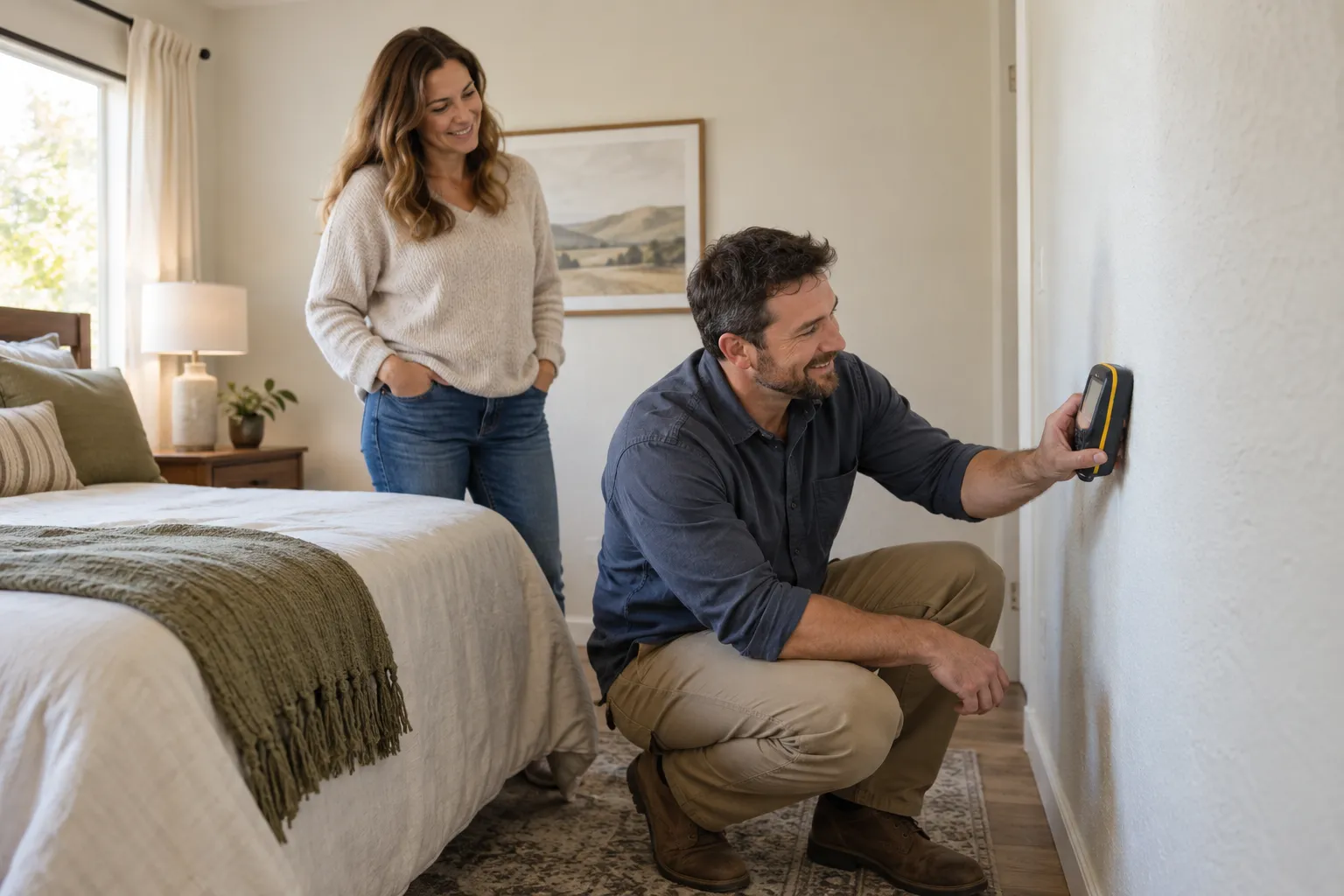
Most use a moisture meter. Some use a thermal camera to spot cool, damp areas behind surfaces. This is how hidden trouble gets found without cutting open walls.
Types of Mold Testing
Not every home needs every test. A provider picks what fits your situation.
Air Samples
A small pump pulls air through a lab cartridge. Results compare indoor air with outdoor air. Wildfire smoke and dusty dry seasons can change outdoor numbers, so timing matters.
Surface and Bulk Samples
A swab, tape lift or small piece of material shows what is growing on a specific spot. This helps identify the type of mold.
If you want certified mold testing, ask who analyzes the samples and whether the lab is accredited.
Reading Your Results
A lab report lists mold types and amounts. It can look like a wall of Latin names. A good provider walks you through it in plain words.
You should learn which areas are affected, how they compare with outdoors, and what the likely moisture source is. If results point to a heavy problem, the next step may be residential mold removal. Black mold remediation has its own page, so this one stays on testing.
Inspection and Removal: Together or Apart?
Some companies do both. Others only inspect. Both setups can work.
A separate inspector has no stake in selling you removal work. A combined company can move faster. Either way, ask for the findings in writing so you can compare quotes.
Getting Ready for the Visit
A little prep saves time:
- Clear access to under-sink cabinets, the attic hatch and the crawl space
- Write down where you smelled or saw anything
- Gather notes on past leaks or repairs
- Keep windows closed for a few hours before air sampling, if asked
Ask Before You Hire
A few questions go a long way.
Good Answers Sound Like This
Ask what training they have, what they will test and why, and which lab they use. Ask if the report includes photos, moisture readings and a plain plan. A solid provider answers without rushing you.
Red Flags
Be careful if someone insists you must test every room, pushes a same-visit removal contract, or cannot explain the report. Vague pricing is another warning sign. Get a written quote.
After the Results: Fix It, Keep It Fixed
Testing is not the end. Once the moisture source is repaired, keep humidity low, use bath fans, clean gutters before winter rain, and check under sinks now and then. A quick look each season is easier than a big repair later.
If you want a nearby provider to look at your home, start with a call.
What's Included
Visual Check
The provider inspects ceilings, walls, attics and crawl spaces for staining, damp spots and signs of past leaks.
Moisture Readings Taken
Meters or thermal cameras help find hidden dampness without opening up your walls.
Lab-Backed Sampling Options
Air, surface or material samples go to a lab so results rely on more than a guess.
Written Report
You get findings in plain language, often with photos, so you can compare quotes and plan next steps.
What Mold Testing Typically Costs in the U.S.
Prices change with home size, number of samples and access. These are typical U.S. ranges only. Always ask for a written quote that lists exactly what is included before you agree.
| Item | Typical range | Notes |
|---|---|---|
| Basic home inspection | $300 – $1,000 | Visual check plus moisture readings |
| Air sample (each) | $50 – $150 | Usually paired with an outdoor sample |
| Surface or tape sample (each) | $30 – $100 | Identifies the type of growth in one spot |
| Lab analysis fees | $40 – $150 per sample | Sometimes bundled into the inspection price |
| Thermal imaging or moisture mapping | $100 – $500 | Helpful for hidden dampness |
| Post-removal clearance test | $200 – $600 | Confirms an area is ready after the work |
How It Works
Share What You Notice
Tell the provider about smells, stains, past leaks and anyone in the home with breathing concerns.
Walkthrough Inspection
They check likely trouble spots and take moisture readings throughout the home.
Samples Sent to Lab
If testing makes sense, samples go to a lab for careful analysis.
Review Results and Next Steps
You get a written report and a plain explanation of what to do next.
Why Call Marshallfeet Mold Help
Facts First
Testing replaces worry and guessing with real information, so you spend money only on work you actually need.
Find Causes
A good inspection looks for the water source, not just the spot.
Clear Reports
Written findings help you compare quotes and keep records for later.
Peace of Mind
Knowing what is in your home helps you plan calmly and act with confidence.
Other Services

Need mold inspection & testing services in San Jose?
Questions about mold? Request a callback to check provider availability, or write to contact@marshallfeet.garden. Every request comes with no obligation.
No obligationMold Inspection & Testing Services FAQ
How do I know if I need a mold inspection?
Consider one if you smell mold but cannot see it, had a leak or flood, or notice ongoing stuffy-nose symptoms at home. A small, visible patch may not need testing. A local provider can help you decide before you spend money.
Can I just use a store-bought mold test kit?
Kits can show that spores exist, but spores are in every home. They rarely tell you how much, where, or why. A provider with lab sampling gives far more useful answers.
How long does a mold inspection take?
Most visits take one to a few hours, depending on home size and how many samples are taken. Lab results often take several days. Ask your provider for their typical timeline when you book.
Reach a local provider
Questions about mold? Request a callback to check provider availability, or write to contact@marshallfeet.garden. Every request comes with no obligation.
No obligation